




Ingredients in Pasta Sauce
Reading ingredients in pasta sauce is straightforward once you know the order. Fody’s Marinara keeps that list short.
TL;DR
-
Most pasta sauce ingredients start with tomatoes, olive oil, herbs, and salt.
-
Ingredients are listed by weight, so the first few tell you the most.
-
Added sugar can show up as dextrose, corn syrup, or rice syrup.
-
Onion and garlic are common, so scan the whole list if you avoid them.
-
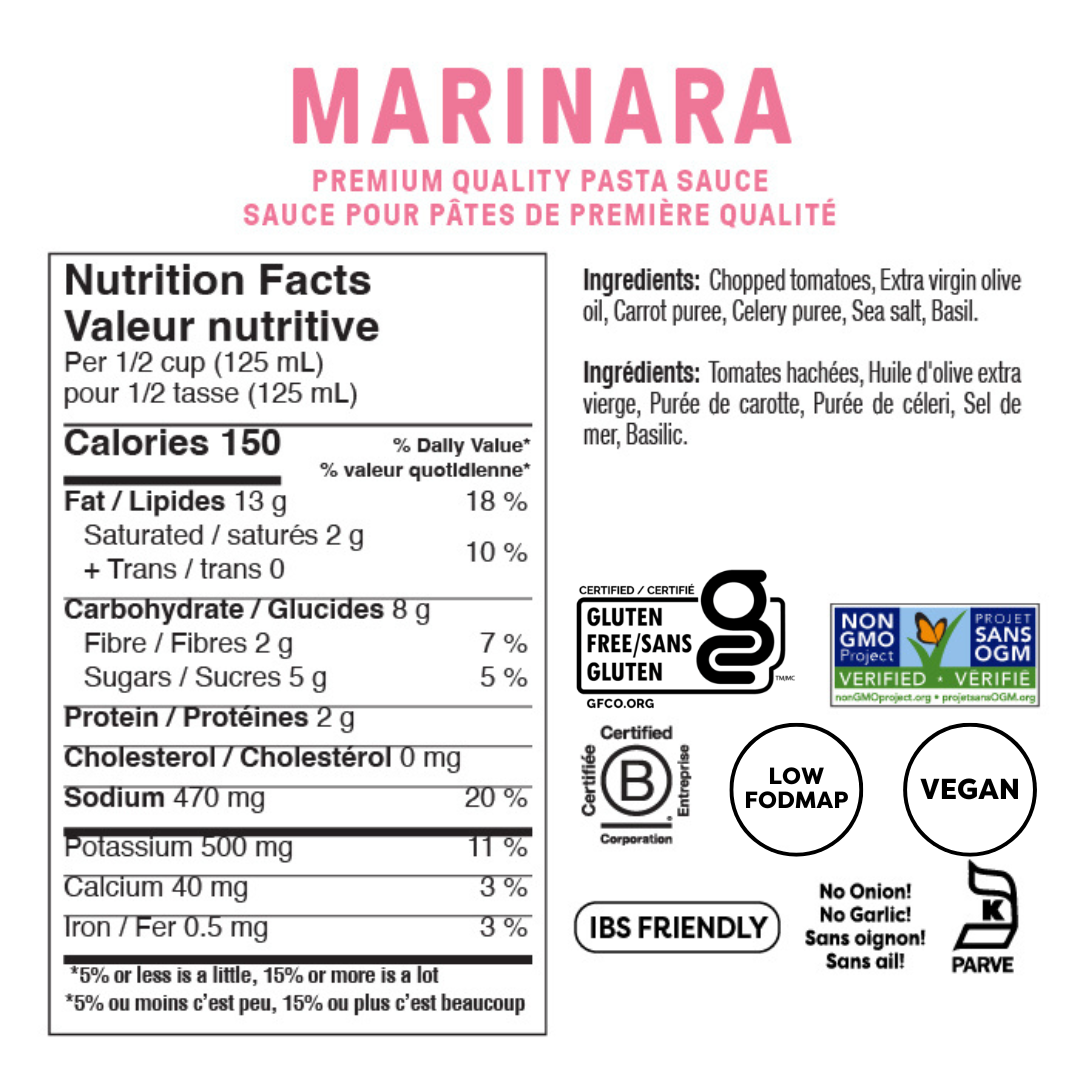
Fody's Marinara Pasta Sauce is onion- and garlic-free and tested and certified Low FODMAP.
Core Pasta Sauce Ingredients
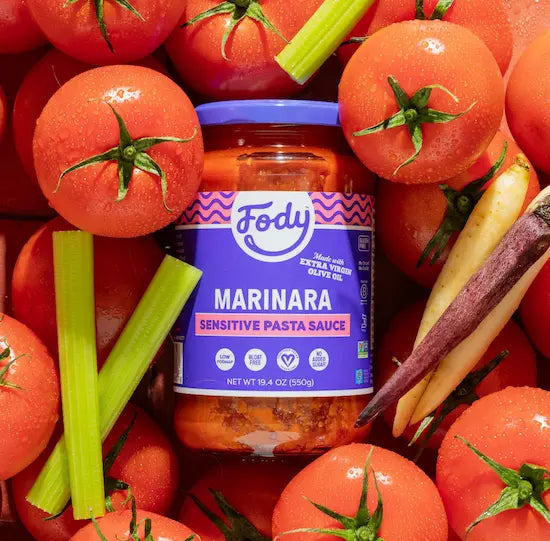
Most pasta sauce ingredients start with the same base: tomatoes, olive oil, herbs, and salt. Many traditional lists also add onions and garlic. Richer versions may add extra vegetables, cream, cheese, or wine. The sections below look at each ingredient and what its place on the list tells you.
How Ingredients in Pasta Sauce Are Listed
Reading a pasta sauce label starts with order. Ingredients are listed by weight, highest amount first, so the opening words show what the jar is mostly made of. Tomatoes should lead, followed by flavour ingredients. Take a neutral example: tomatoes, olive oil, basil, salt. That reads as a tomato-based sauce seasoned with oil and herbs. Apply the same reading to any set of jarred pasta sauce ingredients.
Whole, Crushed or Puréed Tomatoes
The tomato base is usually named by its form: whole tomatoes, crushed tomatoes, purée or paste. That one word hints at texture and taste. One testing report found that sauces built on whole tomatoes tasted brighter, while paste or purée bases came across as sweeter and less fresh. Treat that as a single finding rather than a rule, since cooking and seasoning also shape flavour.
Olive Oil and Salt as Simple Ingredients in Pasta Sauce
After the tomatoes, olive oil is one of the most common flavour ingredients on the list, and some jars specify extra virgin olive oil. It carries the herbs and rounds out the texture. Salt is worth a closer look, because amounts differ from one sauce to the next. Among simple ingredients in pasta sauce, these two do quite important work, so compare them across jars.
Why Onion and Garlic Are Common
Onion and garlic are aromatics. Cooks often sauté them early to build depth of flavour before the tomatoes go in, which is why they appear in most mainstream pasta sauces. For readers with sensitive digestion, that matters: onion and garlic are not Low FODMAP. If you are avoiding them, they are the first ingredients to look for on any list.
Pasta Sauce Without Onion and Garlic
A pasta sauce without onion and garlic can still taste rich and satisfying. The flavour comes from slow-cooked tomatoes, herbs like basil and oregano, olive oil, and sometimes other vegetables such as carrots or bell peppers. When you check a jar, scan the whole ingredient list for onion and garlic in any form, including powders, rather than relying on the front label. For more ways to build taste, browse these onion- and garlic-free flavour ideas.
Simple Ingredients in Pasta Sauce
Simple ingredients in pasta sauce make a jar easier to read at a glance. Sauces built from tomatoes, vegetables, spices, and seasonings let you check the list in seconds. A short list of recognizable ingredients is a common buying guide, because each item is something you can picture and judge for yourself. When a list runs long, slow down and read every line before deciding.
Onion- and Garlic-Free Pasta Sauce at Fody
Fody's Marinara Pasta Sauce is tested and certified Low FODMAP, gluten-free, vegan, and onion- and garlic-free. Its ingredient list is short: Chopped Tomatoes, Extra Virgin Olive Oil, Carrot Puree, Celery Puree, Sea Salt, Basil. Made with vine-ripened California tomatoes and no added sugar, each ingredient is easy to recognize. Find Marinara Pasta Sauce on fodyfoods.ca.
Added Sugar Among the Ingredients in Pasta Sauce
Added sugar does not always appear as the word sugar. On an ingredient list, it can show up as:
-
dextrose
-
sucrose
-
high-fructose corn syrup
-
corn syrup
-
maltose
-
rice syrup
Tomatoes contain natural sugar too, so the total sugar figure on older labels mixes both kinds and cannot show what was added. Check the ingredient list, not just the front of the jar.
Fresh Herbs Versus Dried Spices
Herbs are usually named individually, such as basil or oregano, and that wording hints at how the sauce will taste. One testing report found that dried spices tasted harsher than fresh herbs in some sauces. Treat it as a single observation, since preferences vary, but it gives you one more clue when two lists look alike. If you prefer a softer herb note, the herb wording is worth a second look.
Low FODMAP Pasta Sauce Ingredients
Checking a Low FODMAP pasta sauce starts with the same habit: read the whole list for onion and garlic in any form. The wording on the page matters too. Gut-friendly is a general descriptor, while tested and certified Low FODMAP is a specific claim that applies only to products that carry it. When a product page states that certification, the testing sits behind it, not just your own reading of the list.
Choosing Ingredients in Pasta Sauce With Confidence
Reading ingredients in pasta sauce gets easier with a simple routine. Tomatoes should lead the list, short lists are quicker to judge, added sugar can hide under other names, and onion and garlic deserve a careful scan if you avoid them. With those checks in mind, you can choose a jar with confidence. Explore Fody’s Low FODMAP pasta sauces for no added sugar, Low FODMAP certification and loads of flavour.