
IBS Bars: What Makes a Snack Bar Actually Safe for Sensitive Stomachs?
You've done it. Picked up a bar at the checkout, read the label, saw "natural ingredients," "added fiber," "plant-based," and thought: this one should be fine. Then spent the next two hours regretting it.
The frustrating reality is that snack bars are one of the most common unexpected IBS triggers, not despite their healthy positioning but directly because of it. The ingredients that fuel better-for-you bar marketing, certain fibers, natural sweeteners, and plant-based proteins, are frequently the same ingredients that cause the worst FODMAP reactions when not properly formulated or portioned. If you've been burned by a bar that looked safe but wasn't, that experience reflects a real and systemic problem in how these products are labeled and marketed.
This guide exists to give you a framework for evaluating any snack bar, not just a list of products to buy. By the end, you'll understand exactly why certain ingredients trigger IBS symptoms, how to read a label for FODMAP risk, and what certification actually means compared to a brand's self-reported claim.

Why Most Snack Bars Trigger IBS (Even the 'Healthy' Ones)
The mechanism behind most IBS barrier reactions is fermentation. FODMAPs, fermentable oligosaccharides, disaccharides, monosaccharides, and polyols, are short-chain carbohydrates that are poorly absorbed in the small intestine. When they reach the large intestine intact, gut bacteria ferment them rapidly. This fermentation produces gas, draws water into the intestine via osmosis, and triggers bloating, cramping, urgency, and pain that characterize an IBS reaction.
Snack bars frequently contain multiple FODMAP sources simultaneously, which compounds the reaction. A bar with chicory root fiber, honey, and dried apricots isn't delivering one FODMAP load, it's delivering three, often at doses that would individually approach or exceed threshold levels.
Two labeling misconceptions repeatedly catch IBS shoppers. Gluten-free does not mean Low FODMAP. A bar can be entirely gluten-free while containing dates, agave syrup, and inulin, all of which are high FODMAP. Vegan does not mean IBS-friendly. Plant-based bars frequently rely on dates, cashews, and legume-derived fibers as base ingredients, several of which are significant FODMAP triggers.
The labels that tell you something about dietary preferences tell you almost nothing about FODMAP content. For IBS management, an entirely different evaluation framework is needed.
The IBS Bar Assurance Framework — What to Look for Before You Buy
Before checking anything else, run any bar through these four factors in order. This is the framework that separates genuinely appropriate bars from bars that merely appear appropriate.
Assurance Factor 1: Red-Flag Ingredient Scan.
Check the ingredient list for: inulin, chicory root, chicory root fiber, chicory root extract, fructooligosaccharides, and oligofructose (all versions of the same ingredient); honey, agave, agave nectar, and high-fructose corn syrup; sorbitol, mannitol, xylitol, and isomalt; dates, dried apricots, raisins, sultanas, and figs in significant quantity; cashews and pistachios; and garlic powder or onion powder in savory formats. Any of these in the ingredient list is a meaningful risk signal.
Assurance Factor 2: Serving Size Reality.
FODMAP thresholds are dose-dependent. A bar that has been tested for Low FODMAP compliance is confirmed appropriate at one serving. Eating two servings doubles your FODMAP load. Even with a well-formulated bar, consuming more than the labeled serving size removes the protection that testing provides. This is one of the most commonly overlooked factors in IBS snack management.
Assurance Factor 3: Protein Source Check.
For bars with significant protein content, the protein source matters for FODMAP compliance. Soy protein isolate is generally Low FODMAP at standard serving sizes and is the most reliable plant-based protein option. Whey concentrate contains lactose and is problematic for people with lactose intolerance, which overlaps significantly with IBS. Casein, another dairy-derived protein, carries the same concern. Pea protein is generally well tolerated.
Assurance Factor 4: Fiber Type.
Not all fiber is IBS-safe. Soluble fiber from oats, chia seeds, and psyllium is generally well tolerated and supports stool consistency without triggering fermentation. Some prebiotic fibers can also be well tolerated when carefully formulated and used at appropriate levels.
The key is not just the presence of fiber, but the type, formulation, and serving size. Poorly formulated or excessive amounts of fermentable fiber can trigger symptoms, while well-designed fiber bars use IBS-friendly fibers in balanced amounts to support digestive health without adding unnecessary FODMAP load.
The Ingredient Hit List — Why Each Trigger Actually Hurts
Most guides tell you which ingredients to avoid. This section explains the mechanism behind each one, because understanding why an ingredient triggers IBS makes the framework stick rather than requiring rote memorization.
Inulin and Chicory Root Fiber
Inulin is a fructan, a chain of fructose molecules linked in a way that human digestive enzymes cannot break down. It passes through the small intestine intact and reaches the large intestine, where gut bacteria ferment it rapidly and completely. This fermentation produces large volumes of hydrogen and methane gas, directly causing the bloating and cramping that characterize an inulin reaction.
Inulin is also one of the most commonly added ingredients in bars marketed as high-fiber or gut-healthy because it is cheap, has a neutral flavor, and dramatically increases a product's fiber count on the nutritional label. It appears under multiple names: chicory root, chicory root extract, chicory root fiber, fructooligosaccharides (FOS), and oligofructose are all the same ingredient. Any of these names in an ingredient list identifies an inulin-containing product.
Honey, Agave, and High-Fructose Corn Syrup
The mechanism here is excess fructose. When fructose is consumed alongside equal or greater amounts of glucose, glucose facilitates its absorption in the small intestine via co-transport. When fructose exceeds glucose, as it does in honey, agave, and high-fructose corn syrup, absorption is incomplete. The unabsorbed fructose passes into the large intestine, where it ferments, producing gas and drawing water by osmosis.
Agave is particularly problematic because its fructose-to-glucose ratio is extremely high, among the highest of any commonly used sweetener. Honey, despite its natural origin and widespread use in wellness-positioned bars, produces the same reaction in people with fructose malabsorption. These sweeteners are high FODMAP regardless of their source.
Sugar Alcohols (Sorbitol, Mannitol, Xylitol)
Sugar alcohols are polyols, the "P" in FODMAP. They are poorly absorbed across the small intestinal lining and enter the large intestine partially intact. There, they pull water into the intestinal lumen through osmosis, the mechanism behind their laxative effect, and are fermented by gut bacteria, producing gas. For people with IBS-D specifically, even small amounts of sorbitol or mannitol can trigger urgency, loose stools, and cramping.
Sugar alcohols appear frequently in bars labeled as sugar-free, low-carb, keto-friendly, or diabetic-appropriate, because they provide sweetness without raising blood sugar in the same way as sucrose. They also occur naturally in some dried fruits, including prunes and stone fruits. The "sugar-free" label is not a safety signal for IBS. For many people with IBS-D, it is the opposite.
Dates and High-FODMAP Dried Fruits
Dates are problematic on multiple fronts. They are high in fructans (oligofructose), contain excess fructose that exceeds the fructose-to-glucose absorption threshold, and carry significant amounts of sorbitol. This combination of three overlapping FODMAP categories makes dates among the highest-FODMAP foods available, and they are the primary binding ingredient in most natural-bar formats, including LARABAR and similar clean-label products.
Dried apricots, raisins, figs, and sultanas carry similar concerns, with varying ratios of fructose, sorbitol, and glucose depending on the fruit. Dried cranberries and blueberries in small quantities may fall within certified FODMAP thresholds, but non-certified bars containing these ingredients offer no confirmed serving-size protection.
Cashews and Pistachios
Most nuts are Low FODMAP in appropriate portions, but cashews and pistachios are higher in FODMAPs at typical serving sizes. Cashews contain galacto-oligosaccharides (GOS) and fructans, while pistachios are high in fructans.
However, FODMAP tolerance is dose-dependent. Small or trace amounts may be well tolerated depending on the overall formulation and serving size. These ingredients often appear in bar formulations, so it’s important to consider both quantity and context rather than the ingredient alone.
IBS Bars by Subtype — What Your Gut Type Changes About Bar Selection
Not all IBS is the same, and the bar criteria that benefit one subtype can be actively counterproductive for another.
If You Have IBS-C (Constipation-Predominant)
For IBS-C, adequate fiber from the right sources is a primary bar selection criterion. The goal is to support gut transit and stool consistency without triggering fermentation. Bars with 3g or more of soluble fiber from whole food sources, including oats, chia seeds, or certified psyllium-containing formats, are the most appropriate choice.
Avoid low-fiber bars that offer no meaningful fiber benefit, and avoid bars where fiber content comes primarily from inulin or chicory root, which can trigger gas and bloating rather than support transit. For purpose-built options that specifically address IBS-C fiber needs, Fody’s gut-friendly High Fiber Snack Bars collection is designed around this exact requirement.
If You Have IBS-D (Diarrhea-Predominant)
For IBS-D, two criteria become most important. First, lower fat content. High-fat bars can accelerate gut transit and worsen post-meal urgency. Second, avoidance of sugar alcohols. Ingredients like sorbitol, mannitol, and xylitol can trigger symptoms due to their osmotic effect, even in small amounts.
Choosing bars with moderate fat content and without sugar alcohols can help support better symptom management.
If You Have IBS-M (Mixed)
For IBS-M, symptom patterns shift between constipation and diarrhea in ways that can make optimization difficult. The most important factor in IBS-M bar selection is consistency over optimization: finding a certified bar without trigger ingredients and eating it reliably, rather than tailoring choices to the symptom pattern currently dominant.
FODMAP certification matters most for IBS-M precisely because symptom unpredictability makes bar selection via trial and error particularly costly. A certified bar removes that variable.
High-Fiber IBS Bars — A Closer Look at Fiber Quality
Fiber is one of the most misunderstood nutrition categories in IBS management. While increasing fiber is often recommended, the type, formulation, and amount all matter.
Soluble fiber forms a gel-like consistency in the digestive tract, helping support stool consistency and more stable digestion. Oats, chia seeds, and psyllium are well-known sources. Certain prebiotic fibers can also be well tolerated when carefully formulated and used in appropriate amounts.
One example is the prebiotic-resistant potato starch used in Fody's snack bars — a fiber that feeds beneficial gut bacteria while remaining well-tolerated by people with IBS. Unlike highly fermentable fibers such as inulin or chicory root, it is formulated to support digestive health without the rapid fermentation that drives bloating and discomfort.
In contrast, some types of fiber can be more difficult to tolerate depending on dose and individual sensitivity. The key consideration is not just total fiber content, but how that fiber is sourced and balanced within the product.
When evaluating a bar, the fiber source is as important as the fiber amount. Well-designed bars use a thoughtful combination of fibers to support digestive health without overwhelming the gut.
How Fody Bars Are Built Differently
Once you understand the framework above, the bar you're looking for becomes clearly defined. It is thoughtfully formulated with IBS in mind, avoiding common high-FODMAP ingredients and using Low FODMAP–appropriate protein sources. Its fiber comes from well-tolerated sources — such as Solnul® Prebiotic Resistant Potato Starch — rather than highly fermentable ones like chicory root.
Fody bars are designed for the real situations where IBS management is hardest: away from home, without access to your kitchen, and in environments where your food options are limited.
Every Fody bar is tested Low FODMAP at the serving size. The formulations exclude garlic powder, onion powder, inulin, chicory root in any labeled form, honey, agave, sugar alcohols, lactose, and wheat. The result is a bar that matches the assurance framework above across all four criteria.
Every Fody bar is also gluten-free and vegan, which addresses the most common co-restrictions that often accompany IBS management. The product range exists to solve one specific real-world problem: being somewhere without a reliably safe snack option. Not a probably-safe option. Not an option that's fine unless you're particularly sensitive. A certified option you can reach for without label anxiety.
Conclusion
Understanding why each trigger ingredient causes problems, at the mechanism level rather than just as a list to memorize, is what makes this framework durable. When you know that inulin ferments completely in the colon and produces gas at the volumes that cause bloating and cramping, you stop needing to remember that chicory root is bad and start recognizing it in every form it appears on a label.
Fody bars are thoughtfully formulated, clean-ingredient, low-FODMAP protein, well-tolerated fiber, and purpose-built for the real-world situations where IBS management is hardest. For digestive-friendly snacking options beyond bars, the Digestive-Friendly Snacks collection applies the same standard across a broader range. For higher-fiber options to support daily fiber intake, the New High Fiber Snack Bars are a great place to start.
References
- Gibson PR, Shepherd SJ. Evidence-based dietary management of functional gastrointestinal symptoms: the FODMAP approach. J Gastroenterol Hepatol. 2010;25(2):252–258. https://doi.org/10.1111/j.1440-1746.2009.06149.x
- Halmos EP, Power VA, Shepherd SJ, Gibson PR, Muir JG. A diet low in FODMAPs reduces symptoms of irritable bowel syndrome. Gastroenterology. 2014;146(1):67–75.e5. https://doi.org/10.1053/j.gastro.2013.09.046
- Staudacher HM, Whelan K. The low FODMAP diet: recent advances in understanding its mechanisms and efficacy in IBS. Gut. 2017;66(8):1517–1527. https://doi.org/10.1136/gutjnl-2017-313750
- Lacy BE, Patel NK. Rome criteria and a diagnostic approach to irritable bowel syndrome. J Clin Med. 2017;6(11):99. https://doi.org/10.3390/jcm6110099
- Whelan K, Martin LD, Staudacher HM, Lomer MCE. The low FODMAP diet in the management of irritable bowel syndrome: an evidence-based review of FODMAP restriction, reintroduction and personalisation in clinical practice. J Hum Nutr Diet. 2018;31(2):239–255. https://doi.org/10.1111/jhn.12530
- Muir JG, Rose R, Rosella O, et al. Measurement of short-chain carbohydrates in common Australian vegetables and fruits by high-performance liquid chromatography (HPLC). J Agric Food Chem. 2009;57(2):554–565. https://doi.org/10.1021/jf8022623
- Bonhéur L, Baxter NT, Schmidt AW, et al. Resistant starch from high amylose maize positively influences the gut microbiome in healthy adults. Nutrients. 2021;13(11):3930. https://doi.org/10.3390/nu13113930
So, what are you waiting for?
Shop from some of our best selling, low FODMAP foods.
 Barre Collation Riche en Fibres à saveur de Pain Perdu à la Cannelle - Paquet de 12
Barre Collation Riche en Fibres à saveur de Pain Perdu à la Cannelle - Paquet de 12
$32.99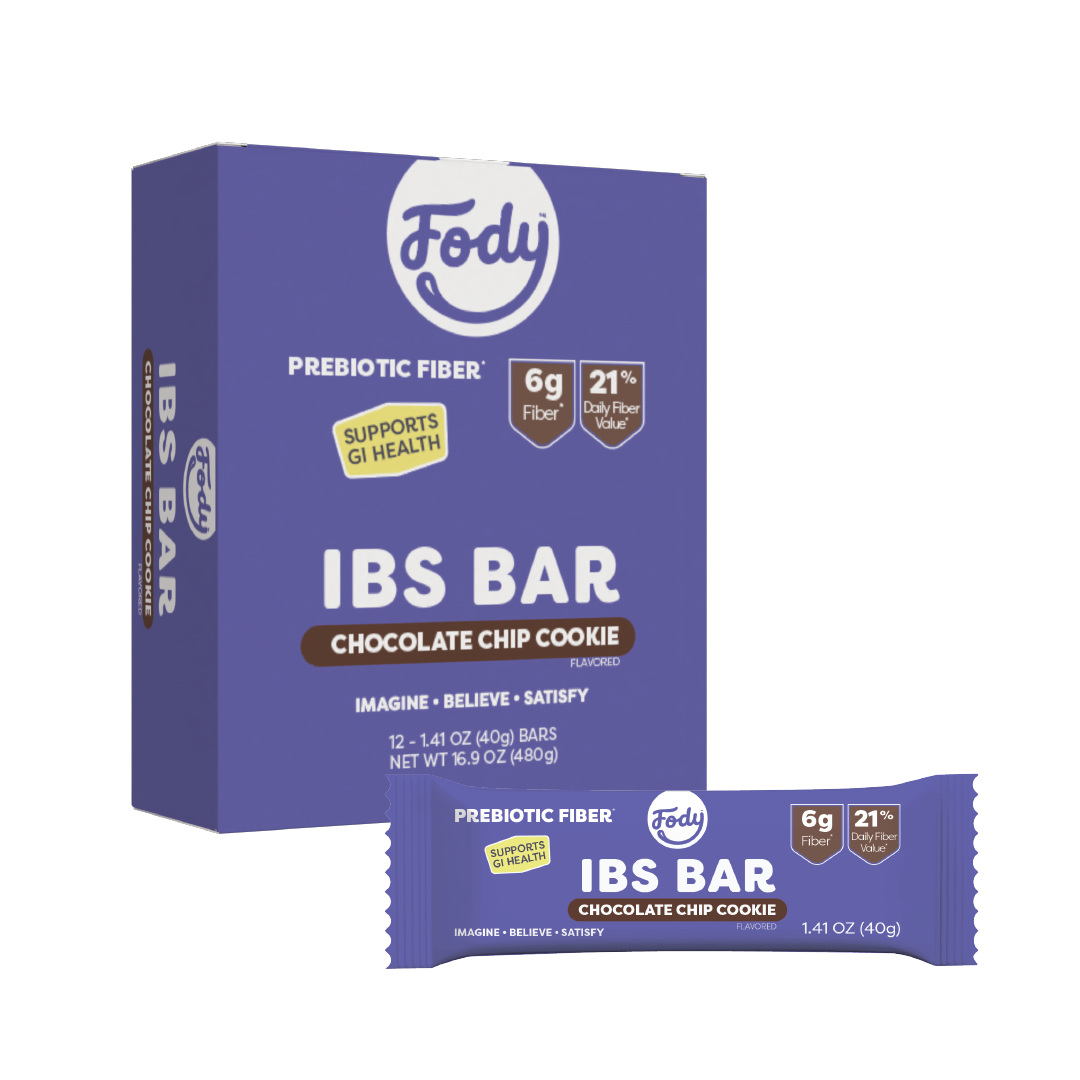
 Barre Collation Riche en Fibres à saveur de Biscuit aux Pépites de Chocolat - Paquet de 12
Barre Collation Riche en Fibres à saveur de Biscuit aux Pépites de Chocolat - Paquet de 12
$32.99