



Low Acid Snacks Guide
This guide to low-acid snacks covers everyday options and Fody’s easy Low FODMAP snacks where the two lists overlap.
TL;DR
-
Low-acid snacks are naturally low in acid, low in fat and eaten in small portions.
-
Melon, carrots, cucumber, rice cakes and plain popcorn are easy everyday picks.
-
Firm, unripe bananas are Low FODMAP; ripe bananas are not, though reflux sources often prefer them.
-
Read ingredient lists for citrus, vinegar, mint and heavy fat before trusting front-of-pack claims.
-
Avoid snacking within 2 to 3 hours of lying down.
Low-Acid Snacks Basics
Low-acid snacks are foods naturally low in acid, usually low in fat, and eaten in small portions. Acidity is measured by pH: ripe bananas sit roughly at pH 5.0 to 5.29, while citrus fruits land around pH 2 to 3. Fat and portion size can matter just as much.
Snack Ideas for Mornings
Mornings are a good place to start with low-acid snack ideas. Dietitian-suggested options include:
-
oatmeal with a drizzle of maple syrup, which is Low FODMAP
-
banana slices with 1 to 2 tablespoons of almond butter
-
a small bowl of melon cubes
If you also follow a Low FODMAP approach, banana ripeness matters, as the sweet snack section explains. Treat these ideas as general guidance, not medical advice.
Afternoon Snack Ideas
Afternoon snacks work well when they are crunchy, filling and low in fat. Carrot sticks and cucumber slices are simple GERD-friendly snacks, as long as you skip creamy or fatty dips. A rice cake with peanut butter and banana slices adds staying power. For something sweeter, reach for low-acid fruits such as melon or banana, and keep the portion modest.
Savoury Snack Options
Savoury snacks depend heavily on preparation. Plain popcorn sits around a neutral pH 7, but butter and heavy oils add fat, so air-popped or lightly oiled is the better choice. Rice cakes and rice crackers are easy staples, and sliced turkey with crackers adds protein, as long as the crackers skip added sweeteners and heavy fat. Plain popcorn and rice cakes also count as low-acid and Low FODMAP snacks.
Sweet Snack Options
Sweet snacks need two checks if you also eat Low FODMAP:
|
Fruit |
Acid |
Low FODMAP status |
|
Cantaloupe |
Very low |
Faible |
|
Watermelon |
Very low |
Not Low FODMAP |
|
Firm, unripe banana |
Reflux sources prefer ripe |
Faible |
|
Ripe banana |
Low |
Not Low FODMAP |
|
Apples, pears |
Often called low |
Not Low FODMAP |
|
Strawberries, pineapple |
Acidic |
Faible |
Pick fruit that fits both goals.
Snacks to Pack for Travel
Good low-acid travel snacks are easy to carry and ideally need no refrigeration. Pack a banana, carrot sticks and bagged plain popcorn. Rice cakes stacked in a bag with a small container of peanut butter travel well, and pre-portioning almonds into small containers keeps servings consistent. Planning low-acid snacks ahead means fewer compromises on the road. Explore Fody's Low FODMAP travel snacks.
Reading Snack Labels
The ingredient list matters more than front-of-pack claims, since words like natural, gut-friendly and high fibre are marketing terms, not guarantees. Scan for:
-
citrus, vinegar or mint listed as ingredients
-
fried snacks or heavy fat
-
inulin, chicory root, agave, high-fructose corn syrup, sorbitol, mannitol or xylitol, if you also eat Low FODMAP
Natural flavours can sometimes conceal onion or garlic powder, too.
Fody Snack Bars Overview
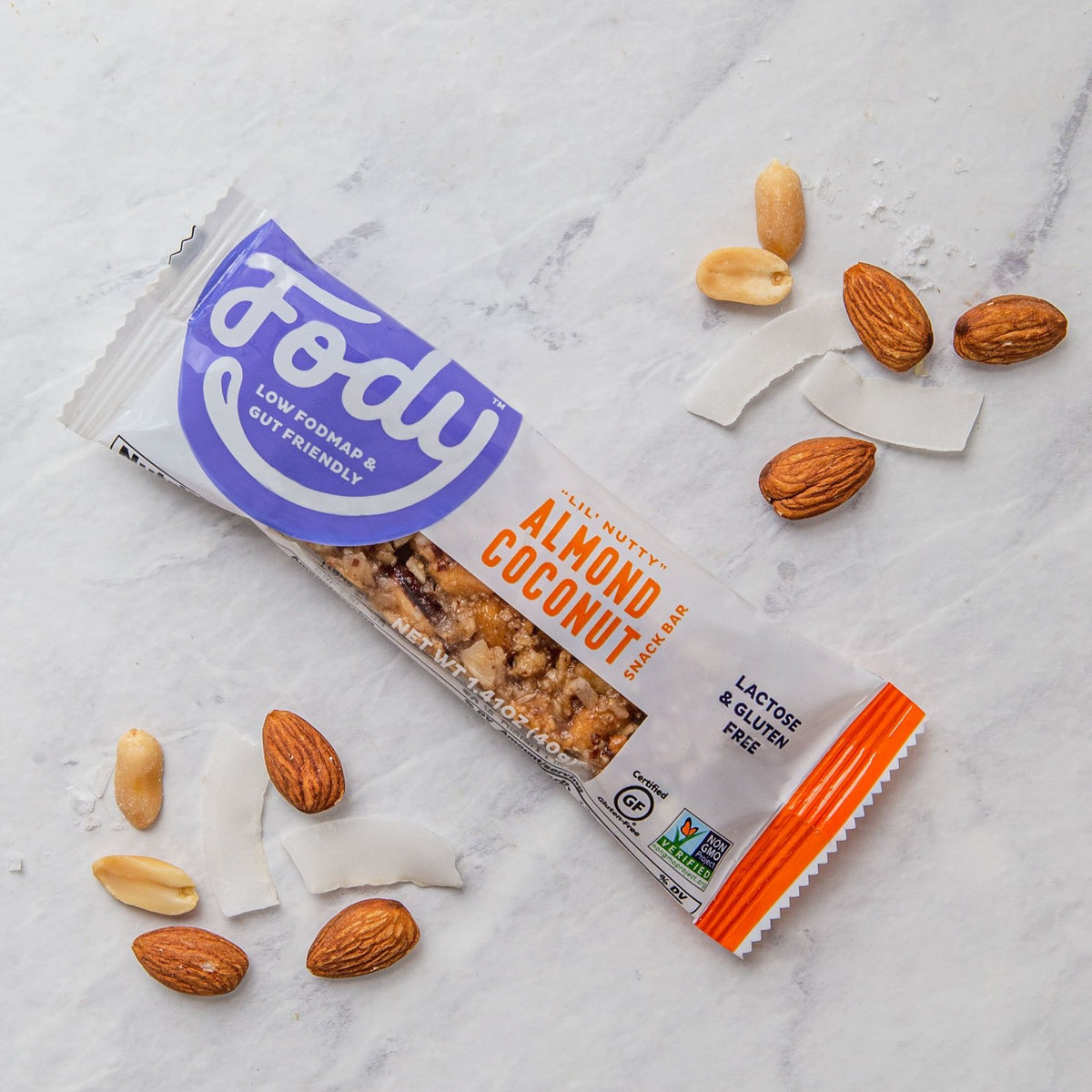
For readers who also follow a Low FODMAP approach, Fody Snack Bars offer a ready-to-go option. The range includes nut bars and gentle fibre bars, all tested and certified Low FODMAP, gluten-free and vegan. Each bar is individually wrapped and shelf-stable, so it travels easily. Acid tolerance is personal, so check each ingredient list against your own triggers. See the full range in the Fody Snack Bars collection.
Building a Snack Routine
A routine turns good ideas into habits. Dietitians often recommend small snacks spread through the day, spaced a few hours from meals. Avoid snacking within 2 to 3 hours of lying down. A short weekly prep session of pre-portioned items makes the right choice the easy one. Keep a food diary as well, noting how you feel about two hours after each snack, since triggers are personal.
Snack Portions and Pairings
Portion size matters because larger portions stretch the stomach and can raise the chance of acid moving up. Put snacks on a plate rather than eating from the package. Pairing helps too: combine a low-acid fruit or grain with a small amount of protein, such as banana with almond butter. Keep pairings low in fat and skip fatty dips, so GERD-friendly snacks stay satisfying without becoming heavy.
Common Snacking Mistakes
A few habits can undo good snack choices:
-
large portions or late-night snacking
-
chips and other fried snacks
-
citrus and carbonated drinks, since bubbles raise stomach pressure
-
spicy or minty snacks
-
sweetened or high-fat crackers
-
trusting front-of-pack claims over the ingredient list
Each one is easy to correct once you spot it, and portion size is a good place to start.
Snack Planning Takeaways
Three rules carry most of this guide. Choose low-acid snacks that are naturally low in acid, keep portions small and measured, and learn your personal triggers over time with a simple food diary. Small, steady habits add up. If symptoms persist, see a healthcare professional for advice that fits you. Explore Fody's Low FODMAP snack bars.